One of my goals this year was to borrow books from my local libraries. Borrowing from libraries is great; they have a broad selection of many genres and reading levels, including accessible and foreign language books. They also have required return dates, encouraging me to read the ones I borrow.
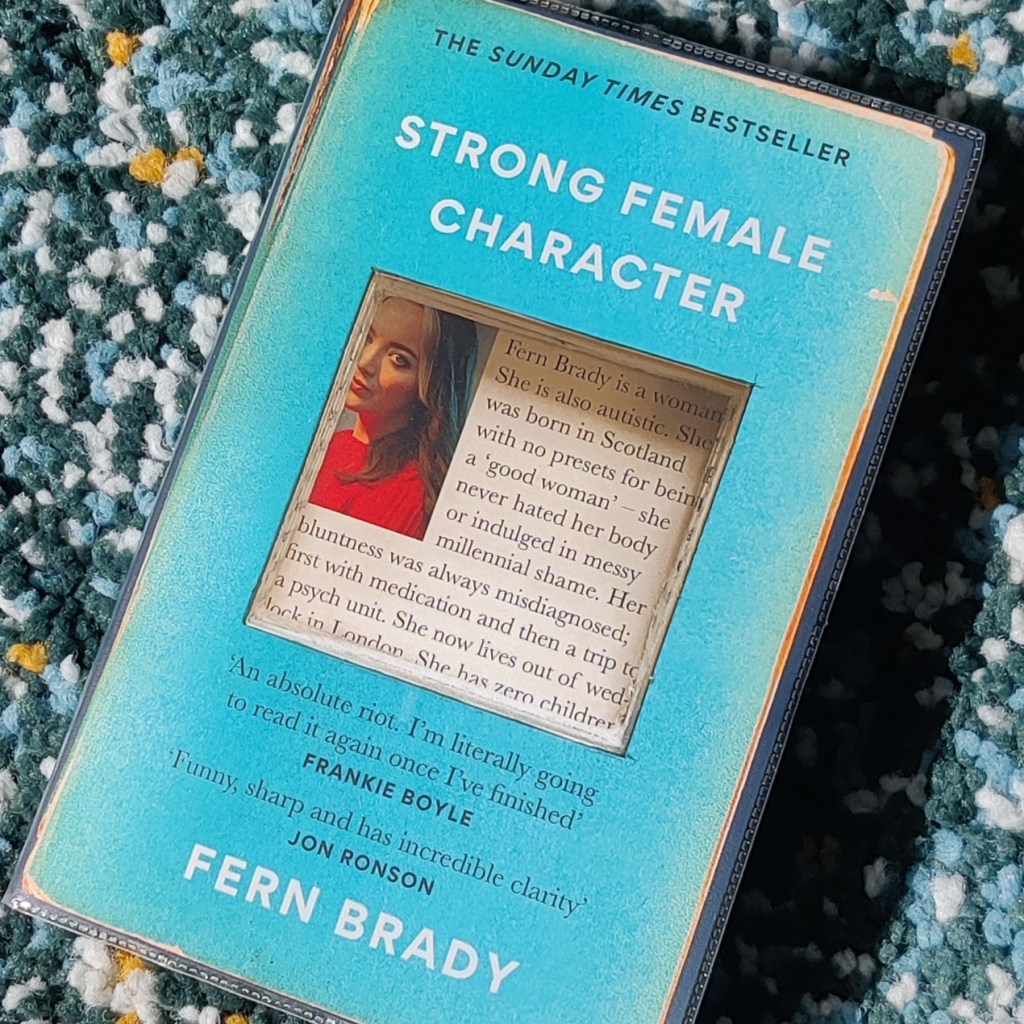
The first book I borrowed this year was Fern Brady’s biography, Strong Female Character. I read the first half of the book in one sitting, and the second half in another.
Being autistic myself, I often find turns of phrase confusing (it’s likely the reason I am so interested in the study of language and literature). The bookish expression “I couldn’t put it down” has baffled me for two decades because you can put it down. Unless the book is somehow physically attached to you by means too unpleasant to describe, or you’re surrounded by landmines and setting it down would lead to events of ultimate destruction, you can put the book down. Yet, with this book, I finally understand what the phrase means.
I found this book so engrossing that during the first three hours of picking it up, nothing else was worthy of my attention. Mindlessly scrolling through Instagram, YouTube, or Pinterest were ideas of the past, this book was my new holy grail! The developments were constant. It was as though my life was held up to a wonky mirror. The specifics are different, but what I understood about myself and others was the same as Fern notes in the book. Despite being formally diagnosed five years ago, I was learning even more about my autistic self the more I read.
Fern’s experiences differ from my own. However, the shared experience of being autistic makes the whole text read as though translated into a language only I speak. When I was young, my behaviours and intentions were misread and misinterpreted by those around me. My family were confused by my ‘tantrums’; they laughed and said, “There won’t be any doors left to slam once you’re a teenager.” This did nothing to abate the overwhelming anger and frustration a meltdown brings.
Years later, Mum commented that I used to “get very cross for no reason” and no one knew how to react. These ‘tantrums’ were, in fact, autistic meltdowns. As Fern notes, I wasn’t doing them to be an arsehole or to annoy and anger my family, I was overwhelmed and slamming doors, shouting, and crying was how I coped.
Misconceptions around autism are rampant, especially how it presents in women and girls. Though I do not identify as a woman, I was born female and raised as a girl, meaning social rules and expectations were placed on me that– to this day– I struggle to live up to. I adapted the best I could by monitoring and suppressing behaviours (known as masking) and learning social rules and exchanges. This was, and continues to be exhausting. Shutdowns and autistic burnout are problems I deal with too often, despite my attempts to ‘unmask’.
I hope books like Fern’s, and the presence of more autistic voices in the media will help dismantle misconceptions around differences, and help build a more accepting world. If you’re looking to branch out in your non-fiction reading, I couldn’t recommend Strong Female Character enough.
 Elmo Moorby
Leave a comment